

 It was a beautiful Saturday morning, the kind that arrives with clarity in what to do and time to do it. I had dropped my daughter off to volunteer and was running a quick errand before coming home to my writing and projects. Everyone had somewhere to be and something meaningful to do. For a few hours, so did I; and then the guilt I carry as a daughter reminded me it was never that simple.
Then my phone rang. Emergency medical professionals were called out to my dad’s house in the rural midwest. One of my dad’s treasured neighbors had called and after a few minutes on the phone, I knew I needed to be there. I live three hours away, though I couldn’t get there quickly.
It just keeps popping up. Guilt. The need to care for others is so deeply rooted into my very existence that I can barely breathe alone without guilt. Just when I feel that I’m making progress toward building a life where I take up space alongside and with others I love, the guilt pops back up.
As a midlife woman in her early fifties, I have a career, a family, and obligations that keep me busily humming throughout the day. I wish I could say I was a wonderful daughter who visited her father often, but that just isn’t the case. Weekends are filled with projects, excursions, and lots of driving my teenage daughters around. The emotional labor of holding the house and family together sometimes takes all I have in one weekend, let alone some of the work I am trying to build for myself. So, when I got the call I felt angry. Angry at my dad because he let a weekly caregiver go I set up months ago. Angry at the loss of time I had planned to work on writing and personal projects. Angry at myself for feeling angry.
Rather than push past the anger and frustration, I sat with it for a while. Emotions give us information. I believe they are the bridge between our subconscious and conscious minds. I turned from the interstate onto the highway toward my dad’s house. As I drove, the countryside spread out into open fields and valleys. Maybe it was the open space that allowed my mind to wander toward another time I felt similar emotions – toward my mom. I was transported back to my twenties when my mom was ill and doctors didn’t know how to help her. She took many different medications and, because her ailment was unknown, there just wasn’t certainty in the best treatment.
I remembered having to call an ambulance for my mom because I found her unresponsive in the apartment we shared when I was just starting life in my twenties. The EMTs actually couldn’t find where we lived and I ended up having to leave her to wave them down. When I saw her next, she was in the hospital with a breathing tube in her throat and wires all over. She wasn’t happy that I caused her to be in the hospital. Even when I thought I gave the right care, it still didn’t feel good. But, she was alive and lived on for a few years after. She was still ill when I married and moved across the state. Though happy and excited, I felt such guilt at leaving her at that time. She had many family members and a daily caregiver, but the guilt stayed with me.
The memory helped me realize that in my present situation, my anger and frustration were rooted in fear. I was afraid. To be honest, I was afraid I couldn’t take care of him. He required emergency care because he couldn’t get out of his chair, and I am petite and not super strong. I was afraid if it happened again while I was there I wouldn’t be able to help him.
What made this harder was knowing who I was talking about. My dad is about to turn 78. He has both COPD and Parkinson’s Disease, but he is also a Vietnam Vet, divorced twice, living alone in my childhood home in the country on his own terms. On the phone, he told me he felt a nursing home might be the best next step. For him to say that, I knew it was serious.
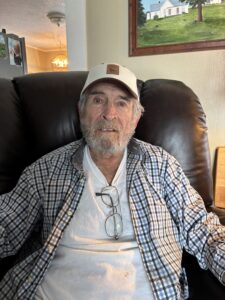 That evening, I made him dinner, helped him get his medications ready for the week, and just talked with him about life, memories, and always, eventually, to my mom. She died at age 60 from COPD and other issues while I lived across the state with my very young family.
By the time I left the next day, I could tell my dad just felt lighter and trusted me. As I showed him the groceries and items I had shopped for him, I think he felt seen and cared for. I was struck by his gratitude — not just for the shopping itself, but for the thought and care I put into selecting things he liked and would enjoy.
Though I couldn’t be there every week, I realized I could plan monthly visits to provide this kind of personalized care more regularly. The work of transitioning at this stage of my life is not fully about letting go of the part of me that serves others. I am learning I can grow and change to better suit myself, find fulfillment, and still show up fully for the people I love.
To be cared for is lovely. But to be shown you are known and valued in the process of caring — that is priceless.

0 Comments