

This is going to be really hard to share. I’m sharing it anyway. Midlife overwhelm is real, and somewhere in the writing, I’m hoping to convince myself it was okay, that I was okay, even when I really wasn’t.
There was a lot of build up before our momentous trip to Ireland. Graduation, birthday celebrations, anxiety and worry about my son abroad after his semester ended, and then preparing our home for our lengthy absence. I am the type of person who doesn’t ask for help much (a self proclaimed flaw rather than a badge of honor, I assure you). So, I planned and prepared for all of those things largely on my own. Needless to say, I was exhausted before our trip even began.

We drove to Chicago from Saint Louis, MO to save on airfare to Ireland, but it made for a very long day before our overnight flight. By the time we landed, we were all pretty tired and cranky, but we were in Ireland! Adrenaline kicked in and I connected to the full joy I knew I would feel when we reunited with our son at the hotel.
Getting through the airport, finding our bags, and even setting up our car rental wasn’t a very big issue. Little did I know what we were in for when we all loaded into the rental car and began our drive into the heart of Dublin. My husband can drive a stick, thank goodness. He can even acclimate to driving on a different side of the road fairly quickly. But, rather naively, we started out forgetting we had no idea how to get where we were going, nor how challenging it was going to be to navigate Dublin roads and traffic. I wasn’t prepared or hadn’t thought through his need for me to navigate via phone map while he worked out how to drive the car. It was a nightmare from the start.
Yes, my husband can drive a stick, but not THIS stick shift car. When we turned onto the major highway, he couldn’t get the right gear. For the next 45 minutes, the car revved and sputtered. It turned off and back on at strange moments. There were one-way roads not noted on Google maps. About five minut
es before we were supposed to reach our hotel, Google maps decided to quit entirely, sending me into a panic. My husband, desperate then, asked our older daughter to please help and she did, but I’ll tell you navigating with even a tiny bit delay in your technology is not easy. She made a mistake and then I think she shut down for a bit. Sleep deprived, dehydrated most likely, and hungry like the rest of us.
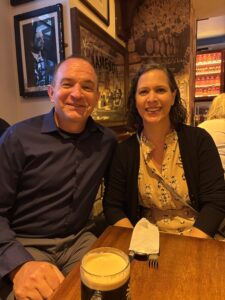
Somehow, we arrived, parked and, by some miracle, my husband and I were still on good terms. We reunited with our son and it was so good to have the full family together that I think I put the whole experience out of my mind.
An hour or so later, though, we got in the elevator to start an evening of exploring the city. My daughters had been prickly at best before, but in the elevator my youngest daughter made a comment about my backpack annoying her and it just sparked emotion in me. Sadness. A few steps outside of the hotel close to where I felt joy in reuniting with my son, I started crying. I was behind all four of them (their backs to me) and then my oldest daughter noticed. She stepped back and grabbed my arm in solidarity and compassion, but this is where the meltdown shifted.
I yanked my arm away from her in a way I can only describe as similar to an angry toddler who doesn’t want to be consoled. Yes, this fifty-two year old woman pulled angrily away from her compassionate daughter on the sidewalk where others could see on a lovely street in the middle of Dublin. I feel such shame as I write. Regret. Embarrassment. It is so hard to admit my lack of control in that moment; such a public display of my emotions and rejection of my family. I’ll be haunted by the memory of that moment for a long while.
My son stepped up, circled my waist with his long arm, and walked the length of a block ahead with me and just soothed me in the sweetest way. It feels full circle as I think about the days I did the same when he was younger. The surprising sweetness of that moment, though, stemmed from the fact that in recent years he didn’t even want to be hugged. All through middle and high school, too, I seemed to be the parent he most needed to break free from or diminish as he sought his own independence. Somehow he was just the right balm to my emotional turmoil in that moment and in less than five minutes I felt in control and apologized to my family, especially my oldest daughter.
Later that evening before we were finally able to attempt a good night’s sleep, I decided to try a new version of my photo journaling method. It was clear I had things to unpack before moving forward with our vacation and I needed insights into the meaning behind my midlife meltdown.
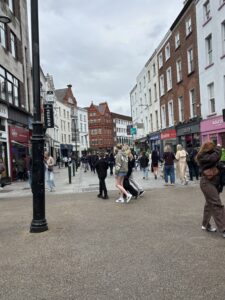
No prompt, just me sitting on the bed scrolling through my photos from the day and trying to center on one or two before journaling. Of course, no one photographed me during my emotional outburst, so I looked for a photo that might connect abstractly. What I found, instead, was a pattern in many of the photos. My family had their backs to me. Once I noticed this, I jumped into my journal and just wrote about what I thought, felt, and attempted to find meaning in that pattern. I wrote, “What strikes me is this is what made me sad. A feeling of being excluded in a way, but that isn’t right, either. I think I’m just trying to capture them in the moment, mostly. Get a little glimpse of them in the world with me on the side lines. Not really away or even excluded, but still a little on the outside.”

After I finished writing, then read over the journal entry as a whole, I selected the following words:
Backs Excluded Outside Balance
I let those words sit on the page and the next day I sat down to unpack them. When I describe the photo harvest journal method, I don’t think it is always clear that the best results and insights come from a bit of distance from the act of journaling. I know I want to dive right into the words and find the meaning under them, but really I need to let them settle into me. Our brains are wired to continue thinking about goals, questions, and concepts after they move from conscious to unconscious. There is no perfect time, at least I haven’t found that in the research, but I think taking enough time to include a night’s sleep is important. So much happens in the brain when we sleep and I believe greater insights can surface if sleep is part of the space.
Below are a few quotes from my written unpacking of the selected words:
“These words from my journal make me see I was worried about any of us feeling excluded or outside of the family unit [now that we were all together again]….I think I felt that myself because the kids are older and different than when they were children. It’s their lack of needing me I feel and that makes me feel excluded…I see, though, it was more of a transition – who am I to them when away and unable to cook or offer the usual support?…Instead of trying to chase them so much to show myself they still need or want me, I need to be steady and patient. They will, and have, come to me when they need me. That will not likely change and it feels good to know.”
Remember, I kept this journal practice in time with my vacation and gained insights I could use right away. If I hadn’t worked through my emotions or named my need to be needed and included, I might have felt bitter, unseen, or any number of others. Because I named my needs, I saw myself more clearly and that was enough. In naming something, we gain control and can then discern what the next action might be.
 I think this trip was a time when my whole family was in transition at once, each of us at a different stage, pulling in different directions without quite knowing it.That kind of shift is hard to name when you’re inside it. It just feels like too much, all at once, with nowhere to put it. It can feel very out of balance. Unstable, even.
But I named what I needed. And naming it was enough to let me set it down.
I didn’t need my family to need me differently. I just needed to see myself clearly enough to stop chasing something that wasn’t actually gone.
If you want to try a version of this practice on your own travels, I put it into a simple guide you can find in the Resources section at quietalchemyspace.com

0 Comments